A Brief History of the Shining Path
Following my report on the new threat by the Shining Path, ilse_cp emailed me asking for more information about this terrorist group, who were they, what did they do and what did they want?
* * *
Through following the Marxist “shining path to revolution” their aim was to overthrow the bourgeois Government and its institutions – police, army, courts. They would replace these with a communist peasant-revolutionary system based on anarchy.
They were formed in the 60’s by Abimael Guzmán, a university teacher, and began spreading their message through universities and various school councils, before forming militias in the late 1970’s, starting in Ayacucho.
The militias were trained in military tactics and weaponry. When the first democratic elections were held in 1980 after a period of military rule, the communists declined to take part and instead embarked on spree of violence, attacking polling stations. The army brought this under control quickly enough, by the ideology was spreading, and the peasantry began to support the communists when hated figures and criminals in the provinces were murdered by them.
As their support and numbers grew, so did the territory that became off-limits to the Peruvian state and non-supporters. However, the Peruvian state did not immediately respond to this with any noticeable action and mostly ignored the Shining Path, perhaps hoping they’d go away. The new civilian government was also reluctant to give the military the authority to do anything that might re-energize or empower it.
Soon the Shining Path controlled Ayacucho, Apurimac and a number of towns throughout the Andes. The government woke up and sent in the army to these “Emergency Zones”. The army was extremely heavy handed, arresting hundreds of people and committing human rights abuses and killings that Ollanta Humala is avoiding taking responsibility for to this day.
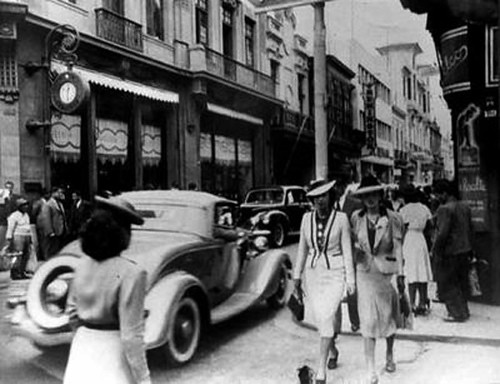
It was then that the violence spread to the cities, Lima in particular. It began with attacks on power stations and industrial areas, dozens of civilians being killed in the process. Then bombs began to be detonated in densely populated areas, as well as burning down shopping malls full of people. The people of cities were gripped with fear of terrorist bombings, hundreds were being killed. The people of the provinces were fearful of the army looking for terrorists and the Shining Path killing those peasants that did not shelter them.
The Shining Path began eliminating non-maoist movements, killing politicians, members of trade unions, and other communists who were against murder. It also began killing priests who shielded those who they wanted dead.
By 1991 the Shining Path had carved themselves out a defendable territory, inside of which the Government had no access. The elected politicians in those areas long since murdered. Guzman now saw himself as an equal to Marx, and Guzmanism was revered more than Marxism and Moaism.
The Peruvian Government was still battling hard to deal with the terrorists. The army had swelled in size, and whole provinces were filled with armed peasants fighting the Shining Path who were murdering poor farmers and destroying communities in the hundreds. The Shining Path, under attack by all (including those who once supported them), for their barbaric practices and murders, publicly denounced the various conventions on human rights. Human rights were for the bourgeois anti-revolutionaries. The very idea of human rights was “counterrevolutionary” and “a weapon of revisionists and imperialists, principally Yankee imperialists”.
The Shining Path had lost all support among those in the areas it had conquered. The peasantry had been banned from performing any traditional practices, anyone who committed a minor crime was murdered, all forms of commerce were outlawed and all markets closed. People were poor, repressed and starving. Hundreds of thousands were fleeing the mountains with their families for refuge in the coastal and jungle regions, living a squalid existence. The Shining Path meanwhile had expanded so far it was struggling to battle for control.
The peasantry had formed patrol groups to defend themselves against the Shining Path, which sometimes lead to the slaughtering of the entire village or to victory and freedom. Fujimori saw that local uprisings were to be more effective than army intervention and gave these peasant militias legal status and fed them supplies.
In 1992, with the Shining Path collapsing, Guzman and some supporters were found hiding in an apartment in Lima, where he was arrested and is now serving a life-term in jail.