Jo Self invites us on a tour of the Ica region, from sand dunes to mummies.
Category: "Ica, Pisco, Nazca Guide"

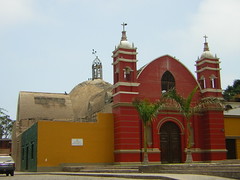
Peru’s African Side: Chincha & El Carmen
Traveling south from Lima into Peru’s southern coastal desert along the Pan-American Highway, the road soon leads to one of the country’s most interesting and culturally diverse regions; Chincha and the Afro-Peruvian heartlands.

The Dakar Rally Heads To Peru
The 2012 Dakar Rally is heading to Peru as South America was chosen to host the event for the fourth consecutive time. Peru will play host to the final four stages of the off-road rally race after the drivers have completed the first stages in Argentina and Chile.

Peruvian Wine – Just not that good?
For The Karikuy blog, Lani Conway explores the vineyards of Ica. She says some people say Peruvian wine is just not that good compared to those of Chile and Argentina. Will wine tasting at several bodegas change her mind?

San Fernando, Marcona, Ica
The bay of San Fernando, located just 70km south east of Nazca on the Pacific coast, is a place of stunning natural desert scenery and is home to a surprising array of animals including some interesting visitors from the Andes mountains.

The Desert Man of Ica
Lloyd Hannis and two friends venture out into the deserts of Ica under the wing of ‘The Desert Man’, a rough and rugged fossil hunter come tour guide who knows the vast expanse like the back of his hand.

Sandboarding and buggy-riding in Huacachina
To one side of the southern regional capital of Ica, and the fertile valley it sits in, is a huge expanse of sand that stretches out for miles in the direction of the coast. Completely barren and devoid of moisture, the winds shift the sands as they have for centuries forming huge dunes that bask and bake in the strong sun. Bleached white with light during the day, and taking on deep warm tones as the sun sets, the dunes hide among them small oases of tiny lakes and palm trees. But there’s no time to sit, stare and take in this scene of exquisite natural beauty, yet another of millions to be found across Peru. It’s time to sandboard!

Some Nazca Lines aircraft over 50 years old
The amazing shapes and lines drawn on the plains of Nasca have led to a growth in passenger numbers at the Maria Reiche aerodrome of some 110% in the past 10 years. This however has not gone hand in hand with proper renovation of the terminal’s aircraft.

Maria Reiche
…Tirelessly, she spent day after day of her life under the hot sun cleaning rocks from lines, and working on her theories as to what they were for. She for one came to the conclusion that the lines were some kind of calendar, marking solstices and the passage of stars and constellations…

Cemetery of Chauchilla
Laying untouched for centuries, this isolated spot in the dry Nazcan desert was used as a place to bury and preserve the mummified dead of the Nazca culture. Since then, the countless hundreds of tombs found here have been pillaged and destroyed. What remains is at first a fascinating sight for visitors – bones, ceramics and cloth scattered across the sands, pieces of ancient fabric blowing around in the wind – but that fascination soon turns to despair as you realise the amount of precious historical information lost.

Lost city of Cahuachi
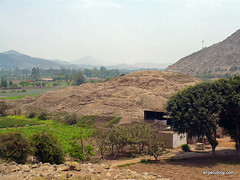
The Nazcan city of Cahuachi was a stunning and magnificent place. Stretching along the dusty hills above the Nazca River valley are an as-yet unknown number of pyramids and temples – a good number of those rolling hills are not at all natural features. Some estimates of the area the city covered are as much as 24km2 – bigger than even the famous Chimú city of Chan Chan.

The Nazca Lines
Etched into the barren rocky desert plains of of Nazca, in the region of Ica, is a mystery yet to be solved. Stretching for miles, and only visible from the air, are a series of lines, geometric shapes and figures that are 2000 years old. Created by the Nazca civilisation, their true purpose has yet to be determined.