Without Machu Picchu you’ll enjoy the trip of a lifetime
Machu Picchu is closed. It will stay that way until the end of February at the very least. Do you have your flights booked and are wondering what to do next? Should you cancel or put off your trip to Cuzco?
Skip directly to the pretty pictures >>
What you do next depends on whether you like to be told what’s worth seeing in a country by someone selling you a tour, or if you prefer to listen to people who know the place inside and out and don’t stand to gain by convincing you that a country has a single be-all-and-end-all attraction.
Machu Picchu is NOT Peru. In fact, it’s a relatively minor attraction in a country blessed with many hundreds of them – natural, cultural and archaeological.
Even if ancient ruins are your thing, bare in mind that Machu Picchu wasn’t even an important Inca site. Nor was it the most remote Inca site, nor was it their best work… it just happens to look great on a postcard.
You are sold on Machu Picchu not because it is special – you have dozens of lost cities to choose from in Peru – but because concentrating visitors in a single location and hiking up the prices is far more profitable that to have visitors spread over a wide area. You’re simply being milked.
Can you imagine someone visiting JUST New York City, or JUST a beach in Florida and telling you they’ve seen all the United States has to offer? Or visiting London but skipping Paris, Rome and Athens because you’ve “seen Europe”? Well if you’re in Peru to see Machu Picchu… you’ve missed out on seeing Peru.
This Peru is a place often ignored by foreign visitors. It is a Peru that costs next to nothing to see and in which your money goes much further – you could quite easily double the length of your visit. This is a land of colourful colonial cities, spectacular museums filled with gold (best museums in the country), valleys lined with pre-Colombian pyramids, rolling green mountains, icy-glacial peaks, lost pre-Incan cities, tropical mangroves and spectacular beaches.
Welcome to Peru, free of the burden that is Cuzco and Machu Picchu!
Southern Peru
 There’s more to Peru than the southern Andes, though most sources don’t know enough about the country to tell you that. It is safe to say there are two or three Perus worth visiting – remember that the country is so huge that you couldn’t see it all in one trip unless you have a few months to spare. One of these Perus is the south leading out from Lima and is home to some of the country’s most famous sights- not because they are better in any way, but just because they’ve been visited by an endless line of tourists who haven’t heard of anything else.
While Machu Picchu has long been considered Peru’s main attraction (sometimes the only attraction), most travelers visit the ruins as part of a larger circuit. Machu Picchu may be taking a long-needed break from visitors, but that just leaves time to more fully explore the rest of Peru’s Southern Circuit. If you had your heart set on hiking to an undiscovered Inca citadel, try the equally majestic and less-touristy Choquequirao.
Places to see:
 Paracas Reserve and the Islas Ballestas (Ica Department): A wildlife-rich reserve several hours south of Lima where visitors have a chance to see colonies of sea lions, Humboldt penguins, flamingoes, and dolphins, as well as dozens of migrating bird species.
 Ica and Huacachina (Ica Department): Set in the middle of Peru’s southern coastal desert, Ica is a major center of Peru’s wine and pisco production. Whether you’re looking for relaxation or adrenaline, you’ll find it here. Spend the day wine tasting, or hit the dunes to try the unique sport of sand boarding.
 Nazca lines (Ica Department): These mysterious lines etched in the desert have attracted almost as many theories as they have visitors. Take a flight over them and catch a glimpse of the Hummingbird, the Monkey, the Astronaut, and dozens of others.
 Arequipa and Colca Canyon (Arequipa Department): Beautiful Arequipa is known as “the white city” for the volcanic sillar that many of its colonial buildings are constructed of. The nearby area, including Colca Canyon (twice as deep as the Grand Canyon in the US) is known for its scenery, trekking, and white-water rafting. This is also the place to see the majestic Condor fly.
 Puno and Lake Titicaca (Puno Department): Lake Titicaca is South America’s largest lake, and home to the fascinating floating islands of Uros, the stationary islands of Taquile and Amantani, as well as the ruins of Inca and pre-Inca cultures. Don’t miss spending a day and night living with a local family on one of the islands.
 Cusco and the Sacred Valley (Cusco Department): Cusco was the capitol of the Inca Empire, and so is surrounded by literally hundreds of Inca ruins. The Sacred Valley is full of of places to visit, the most traveled-through being Ollantaytambo, a city worth exploring on its own merits. With Machu Picchu out of play, spend more time focusing on the greatest creations of the Inca empire – great Sacsayhuamán and the impressive city of Pisaqa. Can’t live without hiking to a lost city in the cloud forests of lower Cuzco? Take your pick of other Machu Picchus, the most developed being Choquequirao.
Northern Peru
 Peru’s national borders extend for hundreds upon hundreds of kilometres north of Lima’s international airport – something that might have left some back-backers who take a direct bus from Ecuador to Lima to continue their South American trip through Peru’s southern “Gringo Trail” – quite bemused.
Despite it being Peru’s better half in the eyes of the relative few who venture into it, it still remains unknown to most visitors and somewhat skipped over by guidebooks to the country. The fact is, if you are interested in any of the following:- Gastronomy, Archaeology, Nature, Beaches, Culture, Trekking, Mountain climbing, Surfing or History – and you like to avoid crowds of tourists, then is is the half of Peru for you.
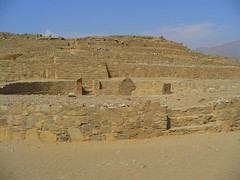
 Caral (Lima Department): Ruins from the oldest civilization in South America (from 2500 BC), this site is only a few hours north of Lima. These desert pyramids were only discovered in recent times and re-wrote the history books of the Americas. Find out how civilization developed out of hunter-gather communities thousands of years ago. The nearby valleys are littered with dozens of unexplored and excavated cities – if you have transport and a passion for exploration, you won’t believe your eyes.
 Huaraz (Huaraz Department): The best place for hiking and trekking in Peru, Huaraz is bursting with adventures. Visit Peru’s receding glaciers, go mountain climbing, or take a hike like the Santa Cruz trek through the Cordillera Blanca. Take a trip to the ancient capital of the Chavín, the amazing underground city of a civilization that ruled the Andes, the first that did so, more than 1000 years before the Incas existed.

 Cajamarca (Cajamarca Department): A pretty Spanish colonial town set amid gorgeous mountains, ingenious ancient aqueducts, and Inca hot springs, Cajamarca is renowned for its carnival celebrations. It’s also the place where the Inca empire came to a swift end when the emperor met with the newly arrived Spanish for the first time. Travel out a bit further and find some spectacular nature, ancient rock-face tombs and a forgotten city from the age of the Chavín and its mysterious stone monoliths.
 Chachapoyas (Amazonas Department): I can’t say enough about how great this under-explored region is. The grand fortress of Kuelap, the Machu Picchu of the north. Towering hidden waterfalls. Ancient mausoleums. Spectacular roads. Mummies! Fantastically beautiful trekking. The Amazonas region is also one of two places to go, other than Tumbes, for birdwatching – this is home to one of the world’s rarest birds.

 Trujillo (La Libertad Department): One of the first cities of the Spaniards in Peru, this colonial gem is so beautiful that luxury Pacific cruise ships are forced to make a stop so their passengers can take a look. In ancient times, long before the Incas, this was the centre of the Moche world, a civilisation that has left us with brightly painted pyramids and erotic pottery! After their downfall rose another empire, that of the Chimú, administered from the sprawling 25km2 adobe city of Chan Chan – one of the largest adobe constructions in the world and until modern times one of the largest cities! Nearby is the beach town of Huanchaco, home to some of Peru’s best surfing, and Chicama and the longest left-hand wave in the world.
 Chiclayo (Lambayeque Department): A modern city that out-grew it’s colonial counterpart of Lambayeque, Chiclayo sits in the middle of the most active archaeological zone of South America, where in the last few years alone some of the most important discoveries of the continent have been made, some just in the past year, other’s in the past decade. In Peru’s very own Valley of the Pyramids sit countless truncated pyramidal temples slowing deteriorating in the rain. The great pre-Inca city of Túcume, watered by the world’s largest system of canals and aqueducts that still keep the valley green today, and the pyramids that pop up above the trees in the dry forests of Pomac-Batán Grande are just some sites open to visitors.
  Those who’d like to know more about the region’s pre-Colombian past are in for a treat – on the outskirts of Chiclayo are the country’s two best museums, the Sipán museum where the finds from the Señor de Sipán dig are on display, and the Museo Nacional Sicán. As if Chiclayo didn’t already have its own fair share of tourist attractions, it also has the beautiful Pimentel beach and the Chaparrí nature reserve home to Peru’s Spectacled Bears. Oh, and don’t forget the ruins of a Spanish city, a Spanish city on the verge of taking Lima’s place as power-centre, until a natural disaster wiped it off the map.
 Piura (Piura Department): Peru’s oldest Spanish city is set in the centre of what was once the homeland of the ancient Vicus and Tallán, and archaeological sites abound. Towards the mountains is Chulucanas and its world famous pottery for those in the know. Towards the beach are modern resort complexes and attractive picture-postcard beach towns with water-front houses on stilts. The region is also home to some of the country’s best cuisine!
 Tumbes (Tumbes Department): Need some more surfing (or just want to work on your tan)? Head up to party-town Mancora – though technically still inside Piura, its from here and into Tumbes, right on the border, that warm pacific currents sweep in and the coast becomes tropical. Tumbes is also famous for its mangroves and wildlife, in fact, most of this region is a protected nature reserve. The mangrove forests on the coast are not only beautiful, but they are a specific attraction for birdwatchers.
The Amazon
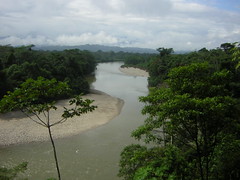
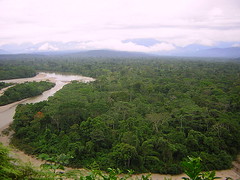
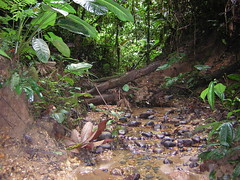 A destination in itself. Every human being should experience the sensation of being the the midst of a tropical rainforest far removed from civilization.
The Amazon rainforest could easily be considered the most beautiful place on earth. Lush green forests full of life, intense heat broken by showers of warm rain. Wild creatures that exist nowhere else on earth. It’s a true paradise, one that man seems set to destroy.
 Manu or Tambopata (Southern Peru): On the edge of the cloud forests of southern Peru, accessible by Cuzco, this area has been recorded by investigators as the most bio-diverse location on the planet. Stay at jungle lodges and take trips to see animals such as parrots, pink dolphins and creatures you never knew existed!
 Pucallpa or Iquitos (Central and Northern Peru): The Amazon is home to humans too, and the two biggest urban centres in the rainforest are Pucallpa and Iquitos. Experience the vast cultural differences between the people of the jungle and the people of the mountains, and enjoy delicious fruits you’ve never seen before and tasty new ways of cooking. One adventure you can’t miss is sailing between the two cities on a river boat, that’s right, along the mighty Amazon river!
 Tarapoto (Northern Peru): Accessed by land from Chachapoyas, or by a short flight from Lima, Tarapoto is located on the forested slopes of the Andes in what is called the cloud forest. This makes for not only a beautiful climate but a world of stunning lagoons and waterfalls – a true tropical paradise you’ll never want to leave. It’s also full of wildlife.
Gastronomy
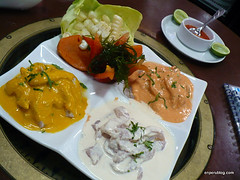 Peruvian food was all but unknown to the world a decade ago, but this has begun to change in recent years. In 2004 an article appeared in The Economist. “Peru can lay claim to one of the world’s dozen or so great cuisines“.
As the news spread of the discovery of one of the world’s best kept secrets, the excitement began to build. In 2006 at the Madrid Fusion Fourth International Summit of Gastronomy, one of the field’s most important conferences, top chefs, critics and journalists were blown away. The rumours were true, and the city of Lima, where many of the nation’s 400+ national and regional dishes can be found in cheap local haunts and fancy restaurants alike, was declared the Gastronomic Capital of the Americas.
Gastro-tourism is taking off in Peru, and you’d be nuts not to take time out to try some of Peru’s many hundreds of distinct national dishes. Yes, you read that right.
In Lima the choice is overwhelming: Seefood Heaven | Creole Classics | Afro-Peruvian | China-Influenced | Fast Food
Outside of Lima we have the seafood dishes unique to the northern coast – ceviches that differ from those found in Lima. In Piura the addition of tropical plantain in the diet mixes up the menu. In Arequipa we have the fashionable Nova Andina craze… traditional Andean ingredients used in modern European style dishes. But Arequipa is also home to a number of dishes that are nothing less than cultural heritage, such as Rocoto Relleno.
So, with just one of over 100,000 registered archaeological sites in Peru closed, in just one small area of Peru, do you really want to cancel your vacation? Go ahead! But don’t tell anyone, they’ll think you’re out of your mind!
This article is heavily based on the original by Jessie Kwak found here. A few of the thumbnails are of photos taken by Robert Kittilson and Marcos Granda. The video is by Peruvian tourist board PromPeru who provide excellent information on every part of Peru.

Tags: amantani, arequipa, batan grande, beach, birdwatching, cajamarca, caral, ceramics, chachapoyas, chan chan, chaparri, chavin, chiclayo, chimu, choquequirao, chulucanas, colan, colca canyon, colonial, condor, cordillera, cruz del condor, cuzco, dunes, food, gastro-tourism, glacier, huacachina, huanchaco, huaraz, huascaran, hummingbird, ica, incas, iquitos, islas ballestas, kuelap, lake titicaca, lambayeque, llanganuco, machu picchu, mancora, mangroves, manu, marvellous spatuletail, moche, museum, nazca, nazca culture, ollantaytambo, paracas, pastoruri, pisaq, pisco, piura, pucallpa, Puerto Chicama, puno, rainforest, sacsayhuaman, señor de sipán, sican, sipán, spaniards, spectacled bear, surfing, tambopata, taquile, tarapoto, tourists, tucume, tumbes, uros, zaña